

Ghana Meteorological Agency Highlights Climate–Water Nexus and Early Warning Imperative at IRAD 2026
The Ghana Meteorological Agency (GMet) has reinforced its leadership in climate science and national resilience, placing meteorological systems at the heart of Ghana’s sustainable development agenda during the International Research and Development (IRAD) Conference 2026.
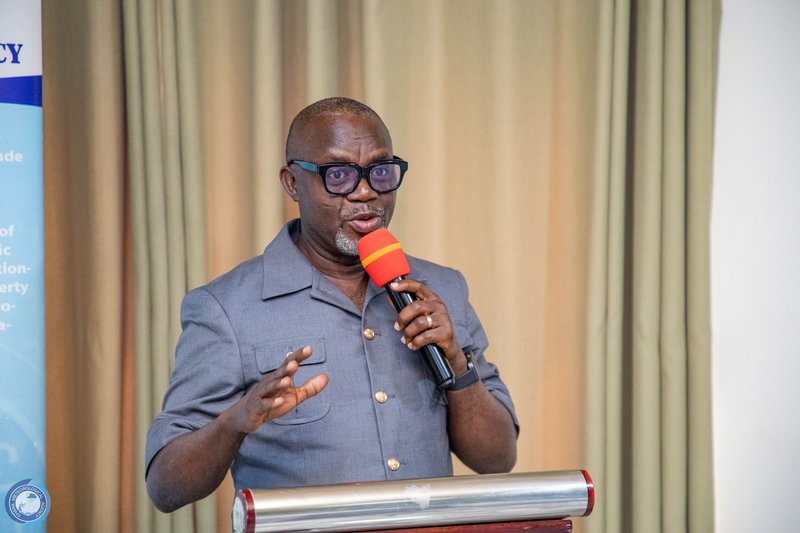
At the conference, hosted at WACWISA–UDS in Tamale, Director-General Dr. Eric Asuman delivered a commissioned presentation on the theme “Meteorological Systems – Water Resources – Climate Change Nexus.” The gathering convened leading scientists, policymakers, and development partners to deliberate on climate resilience, water security, and sustainable systems across the region.
Climate Variability Reshaping Ghana’s Risk Landscape
In his presentation, Dr. Asuman underscored the growing urgency of integrating meteorological and hydrological systems, noting that climate variability and long-term climate change are fundamentally altering rainfall patterns, intensifying heat extremes, and increasing hydrological risks.
From drought-prone savannah zones in northern Ghana to rising sea levels threatening coastal communities, he explained, the country’s vulnerability demands coordinated and science-driven solutions.
Referencing findings from Ghana’s State of the Climate Report, he pointed out that 2024 ranked among the warmest years on record, a development with far-reaching consequences for food security, water availability, public health, and energy demand.
“Integrated meteorological and water information is no longer optional; it is essential for national planning and sustainable development,” he stressed.
Early Warning for All: Turning Global Vision into National Action
A central pillar of the presentation was the United Nations Secretary-General’s Early Warning for All (EW4All) initiative, which seeks universal access to multi-hazard early warning systems.
Dr. Asuman outlined Ghana’s progress in operationalizing the initiative, including the development and validation of a national EW4All Roadmap, strengthening of the National Framework for Climate Services, and integration of the Common Alerting Protocol into GMet’s digital platforms. Weather warnings are now disseminated across multiple communication channels, broadening public access to life-saving information.
He emphasized that early warning systems are proven investments, citing global evidence that timely alerts significantly reduce disaster-related losses.
“Observing today, protecting tomorrow,” he said, reaffirming GMet’s commitment to safeguarding lives and livelihoods through science-based early warning services.
Driving Digital Transformation in Meteorological Services
Aligned with its 2026–2030 Strategic Plan, GMet is undertaking an ambitious modernization drive aimed at enhancing service delivery nationwide.
The Agency is transitioning from manual to automated observation systems, expanding its network of Automatic Weather Stations, and adopting the World Meteorological Organization’s Information System 2.0 framework. Climate products are also being integrated into a modernized web platform to improve accessibility and user engagement.
GMet’s ISO 9001:2015 Quality Management System certification further reflects its commitment to international standards and service excellence.
Climate Services Supporting Water and Agriculture
Beyond early warnings, the Agency continues to expand tailored climate services critical to water resource management and agriculture. These include seasonal rainfall forecasts detailing onset and cessation periods, flood and drought advisories, sub-seasonal outlooks, and marine and inland water forecasts.
A key milestone on the horizon is the launch of the Ghana Climate Atlas in March 2026. The Atlas will provide high-resolution climate projections, including temperature increase scenarios under RCP 4.5 pathways, offering policymakers and planners a vital evidence base for adaptation strategies across sectors.
Global Partnerships Strengthening National Resilience
GMet’s efforts align with the World Meteorological Organization’s strategic priorities, including Early Warning for All, the Global Basic Observing Network, and the Systematic Observations Financing Facility.
Through collaborations with international partners such as the Danish Meteorological Institute, UNEP-GCF, the World Bank, FAO, and the European Union, the Agency continues to strengthen Ghana’s climate resilience architecture and expand its early warning capabilities.
A Strategic Vision for 2026–2030
Dr. Asuman’s presentation reflected a broader institutional vision anchored in strengthened observational infrastructure, user-centered climate services, digital innovation, enhanced partnerships, and institutional sustainability.
By linking meteorological science, water resource management, and climate adaptation planning, GMet is positioning itself as a central enabler of Ghana’s development and resilience agenda.
As climate risks grow increasingly complex, the Agency’s integrated, science-driven approach signals a decisive shift toward a future where no community is left without access to timely, accurate, and actionable early warnings.
©️GMet Communications