

GMet Seeks Support of Sunyani Traditional Council to Deepen Climate Awareness
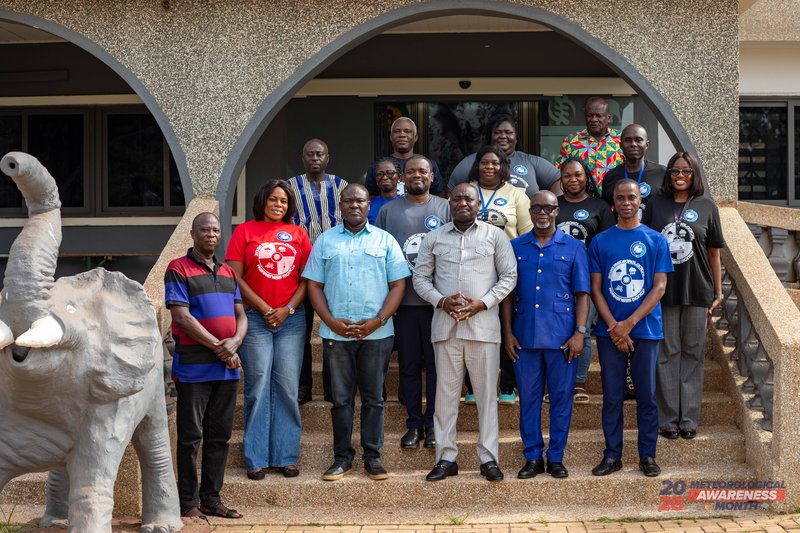
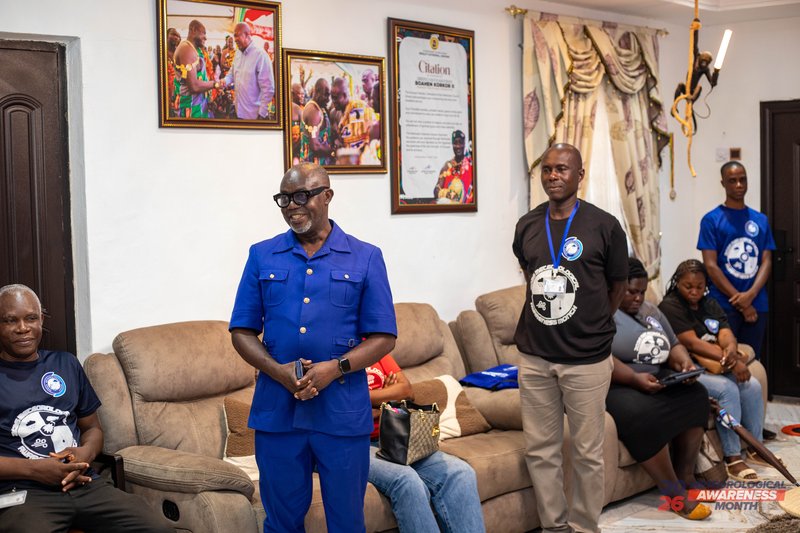
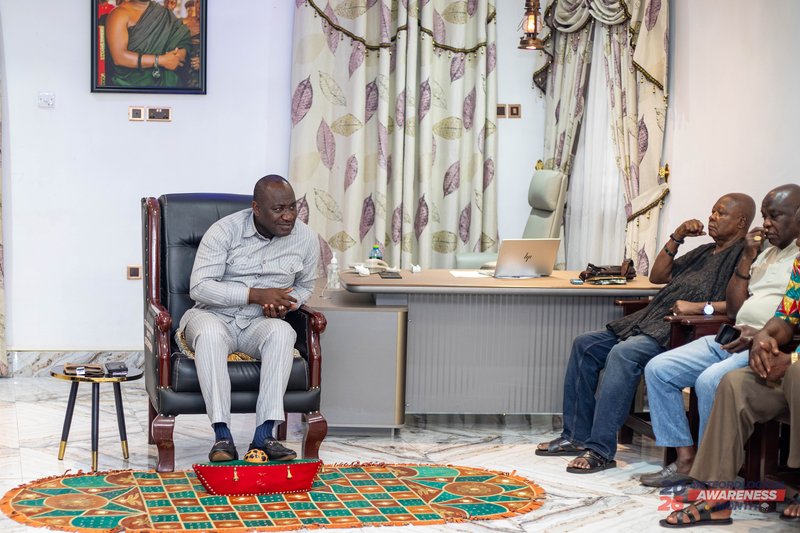
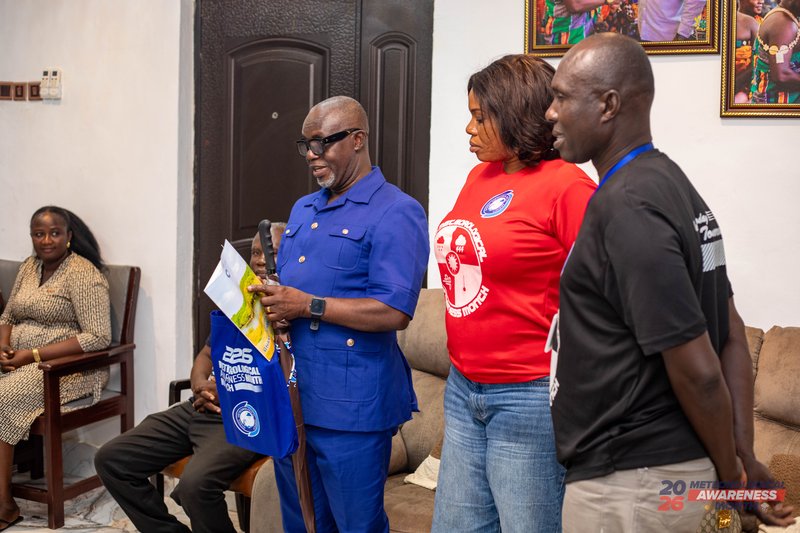
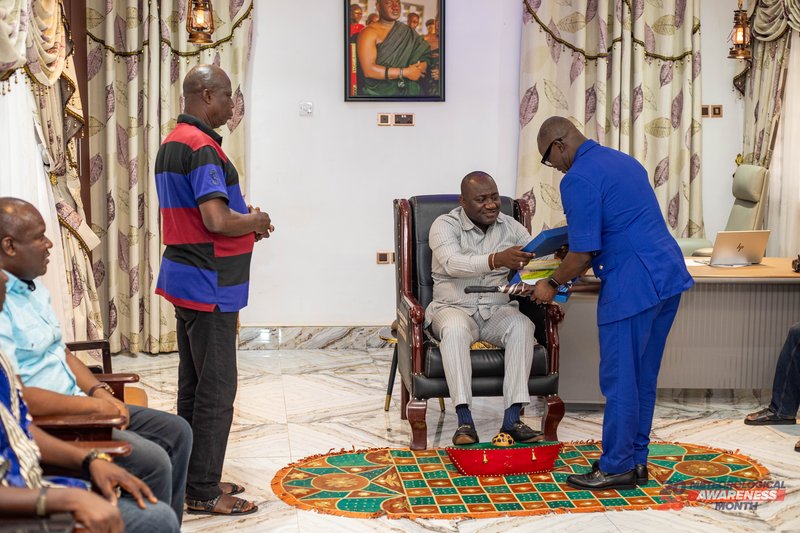
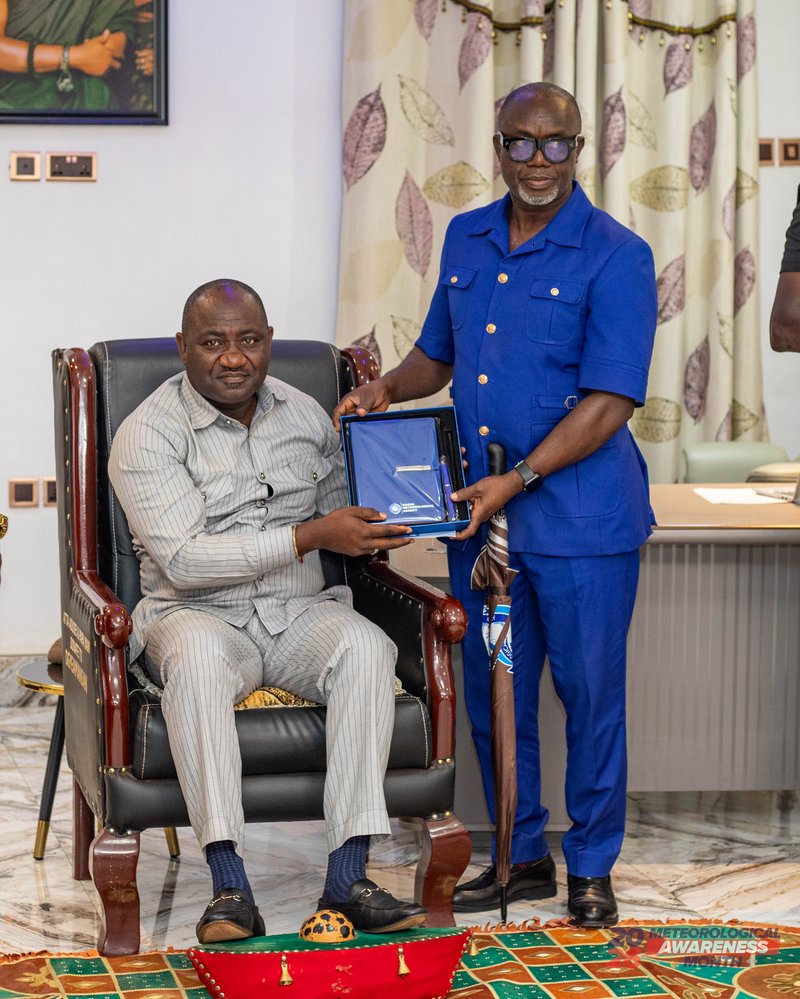
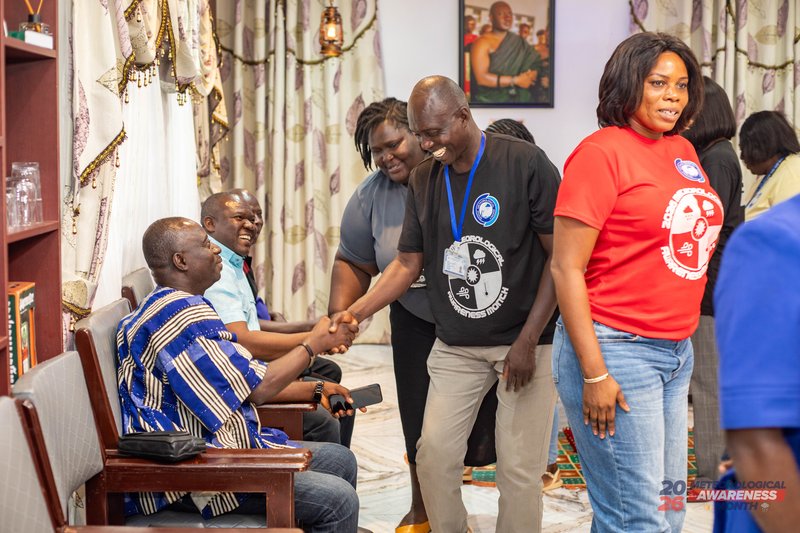
The Ghana Meteorological Agency (GMet) has intensified its stakeholder engagement efforts under the just ended Meteorological Awareness Month (MAM) with a courtesy call on the Sunyani Traditional Council on Thursday, 9 April, 2026, aimed at strengthening climate awareness at the community level.
Leading the delegation, Director-General, Dr. Eric Asuman, emphasized the critical role of traditional authorities in shaping public understanding and response to weather and climate information.
He explained that Ghana’s decision to expand the statutory one-day celebration of World Meteorological Day into a month-long campaign reflects both the importance of meteorological services and the current gap in public awareness.
“We have dedicated a whole month to awareness creation because while our work is critical, awareness remains low. We are here to bring our services to your doorstep and to appeal to you to help amplify the importance of weather and climate information in your engagements,” he stated.
Dr. Asuman highlighted the importance of seasonal forecasts, particularly for agrarian communities like Sunyani, where livelihoods depend heavily on rainfall patterns. He noted that information on the onset and cessation of rains is essential for farmers’ planning and productivity.
He further underscored that institutions such as the National Disaster Management Organisation (NADMO) rely heavily on GMet’s forecasts to prepare for and manage disasters, stressing that the Agency’s services cut across all sectors of the economy.
“From disaster management to agriculture, our information is indispensable. We are therefore counting on traditional leaders to help us drive this message within their communities,” he added.
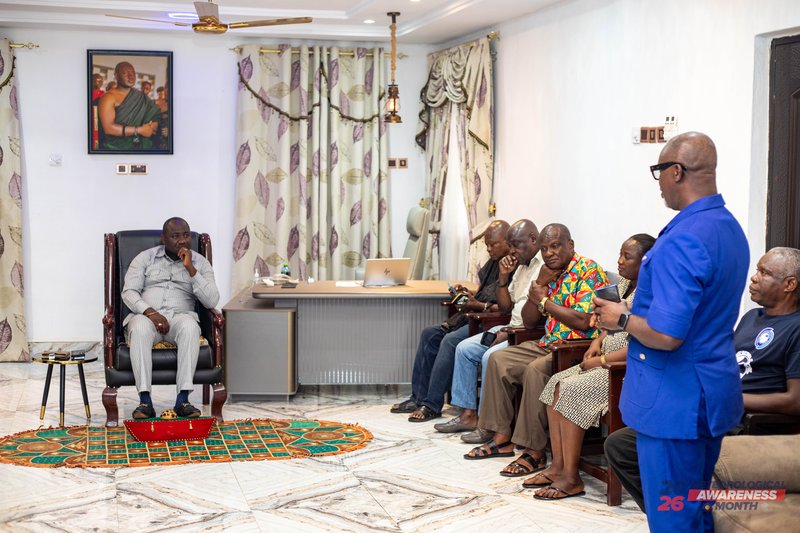
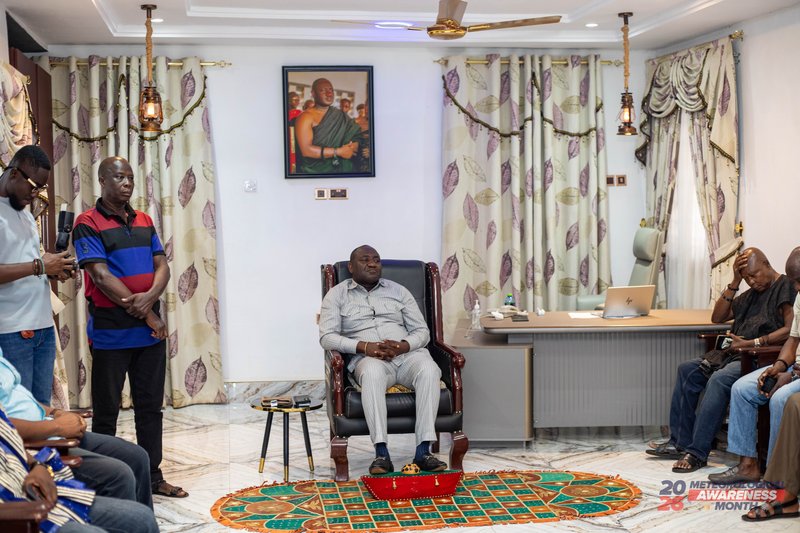
The President of the Sunyani Traditional Council and Paramount Chief of Sunyani, Odeefour Ogyeamansan Boahen Korkor II, acknowledged the importance of GMet’s work but noted that historically, limited exposure to extreme weather events in the area has contributed to low public attention to climate issues.
“In our part of the country, people have not experienced extreme weather events as seen elsewhere, so naturally, attention to weather issues has been low. But times are changing, and we are beginning to see shifts in weather patterns,” he observed.
He cited the recent unusual spread of harmattan conditions as an example of changing climate patterns and stressed the need for increased public education.
The Paramount Chief encouraged GMet to intensify its outreach efforts by leveraging local influencers and traditional communication channels, noting that communities are more likely to trust and respond to familiar voices.
“Take the message to the people in ways they understand, through local languages and community leaders. That is how the message will have real impact,” he advised.
He assured the Agency of the Council’s support and urged the Regional Meteorological Office to work closely with chiefs across the region to deepen public engagement.
Also in attendance were Madam Vivian Abla Kally, Deputy Director-General, General Services, Dr. Ignatius Kweku Williams, Deputy Director-General, Operations, members of the Council and Staff of the Sunyani Meteorological Office.
The visit forms part of a broader strategy by GMet to integrate weather and climate considerations into local governance and community decision-making, ensuring that critical information reaches the grassroots where it is most needed.

©️GMet Communications