

GMet Warns Aviation Stakeholders of Convective Cloud Risks Ahead of Major Rainy Season

Aviation stakeholders have been urged to take proactive measures against the risks posed by convective cloud development as the major rainy season approaches, following a stakeholder engagement organized by the Accra International Airport Meteorological Office of the Ghana Meteorological Agency (GMet).
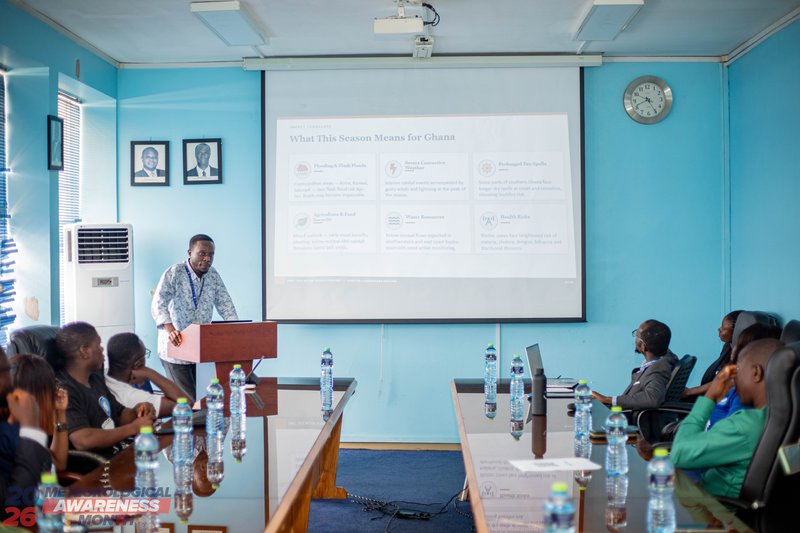
The engagement, held on April 7, 2026, formed part of activities marking Meteorological Awareness Month (MAM) 2026 and brought together airline operators, air traffic service providers, and airport authorities to discuss the implications of the 2026 Major Rainy Season Forecast for Southern Ghana on aviation operations.
Presenting the seasonal forecast, Senior Meteorologist Mr. Joshua Asamoah highlighted the increasing threat posed by convective cloud systems, particularly during afternoon hours, warning that these conditions are likely to trigger severe turbulence, wind shear, and lightning strikes.
“Deep convective clouds expected during the peak of the season will significantly impact flight operations, especially in the afternoons, increasing the risk of turbulence, reduced visibility, and operational disruptions,” he noted.
He explained that heavy rainfall associated with these systems could reduce visibility and cloud ceilings below operational minima, potentially leading to flight diversions, holding patterns, and missed approaches, particularly at Accra International Airport.
Mr. Asamoah further indicated that thunderstorm outflows may generate sudden crosswinds capable of affecting take-off and landing stability, while intense downpours could result in runway contamination and increased hydroplaning risks.
He also cautioned that flash flooding in key operational areas such as Accra, Kumasi, and Takoradi could disrupt ground operations, including aircraft handling, fueling, and passenger movement, ultimately contributing to delays and increased operational costs for airlines.
To mitigate these risks, he encouraged aviation stakeholders to integrate GMet’s seasonal, sub-seasonal, and daily forecasts into flight planning and dispatch operations, while emphasizing the need for enhanced coordination between pilots, air traffic control, and meteorological services.
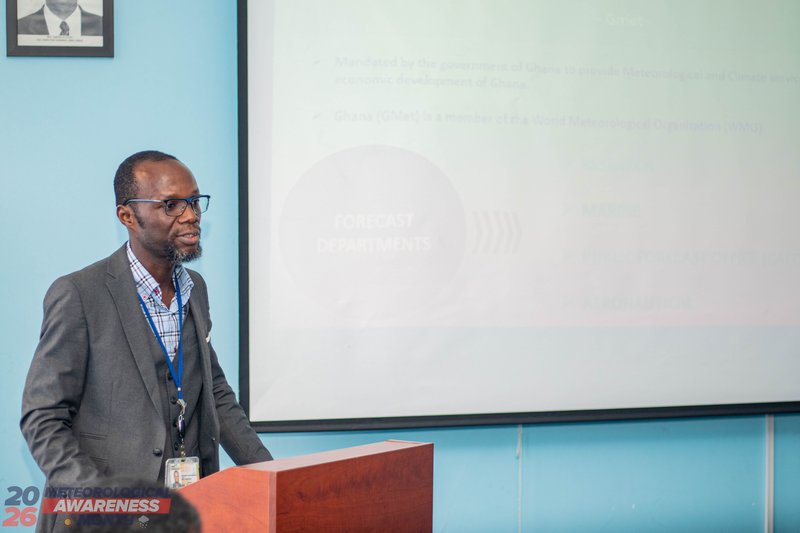
The engagement also featured a presentation by the Manager of the Accra International Airport Meteorological Office, Mr. Raphael Osei Boakye, who provided participants with an overview of the office’s operations and its critical role in supporting aviation safety.
He outlined the range of services provided by the office, including real-time weather observations, aviation forecasts, and the issuance of critical advisories such as SIGMETs, which are essential for safe and efficient flight operations.
Mr. Boakye emphasized the importance of continuous collaboration between the Meteorological Office and aviation stakeholders, noting that timely feedback from users is key to improving the accuracy, relevance, and delivery of weather information.
The engagement concluded with an interactive session, where stakeholders shared operational challenges, provided feedback on existing services, and explored practical ways of strengthening collaboration to enhance aviation safety and efficiency.
The initiative aligns with international best practices outlined by the International Civil Aviation Organization (ICAO) and the World Meteorological Organization, which emphasize sustained engagement between meteorological service providers and users.
Officials of the Ghana Meteorological Agency reiterated their commitment to supporting the aviation industry with accurate, timely, and user-focused weather information, particularly as Ghana prepares for the peak of the rainy season.






















©️GMet Communications